(603) 688-6096
  AtlasRemodelingNH@gmail.com




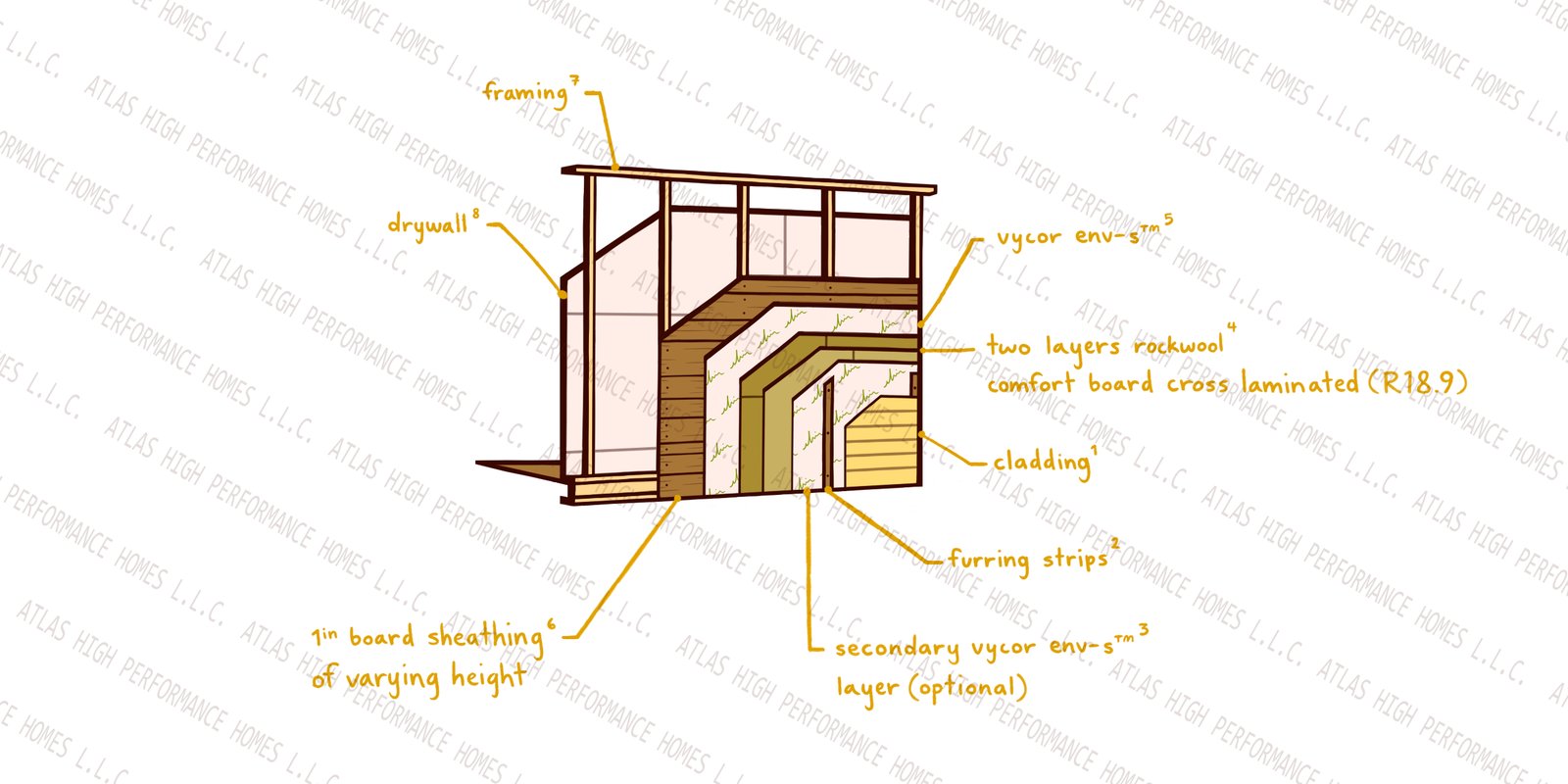

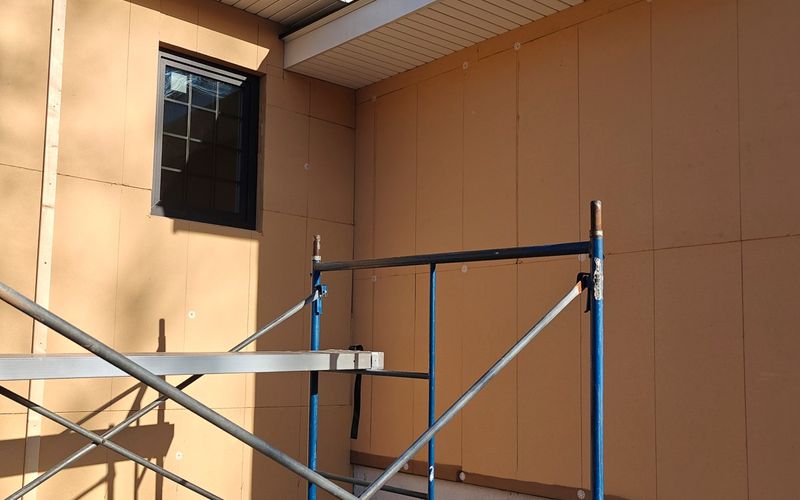
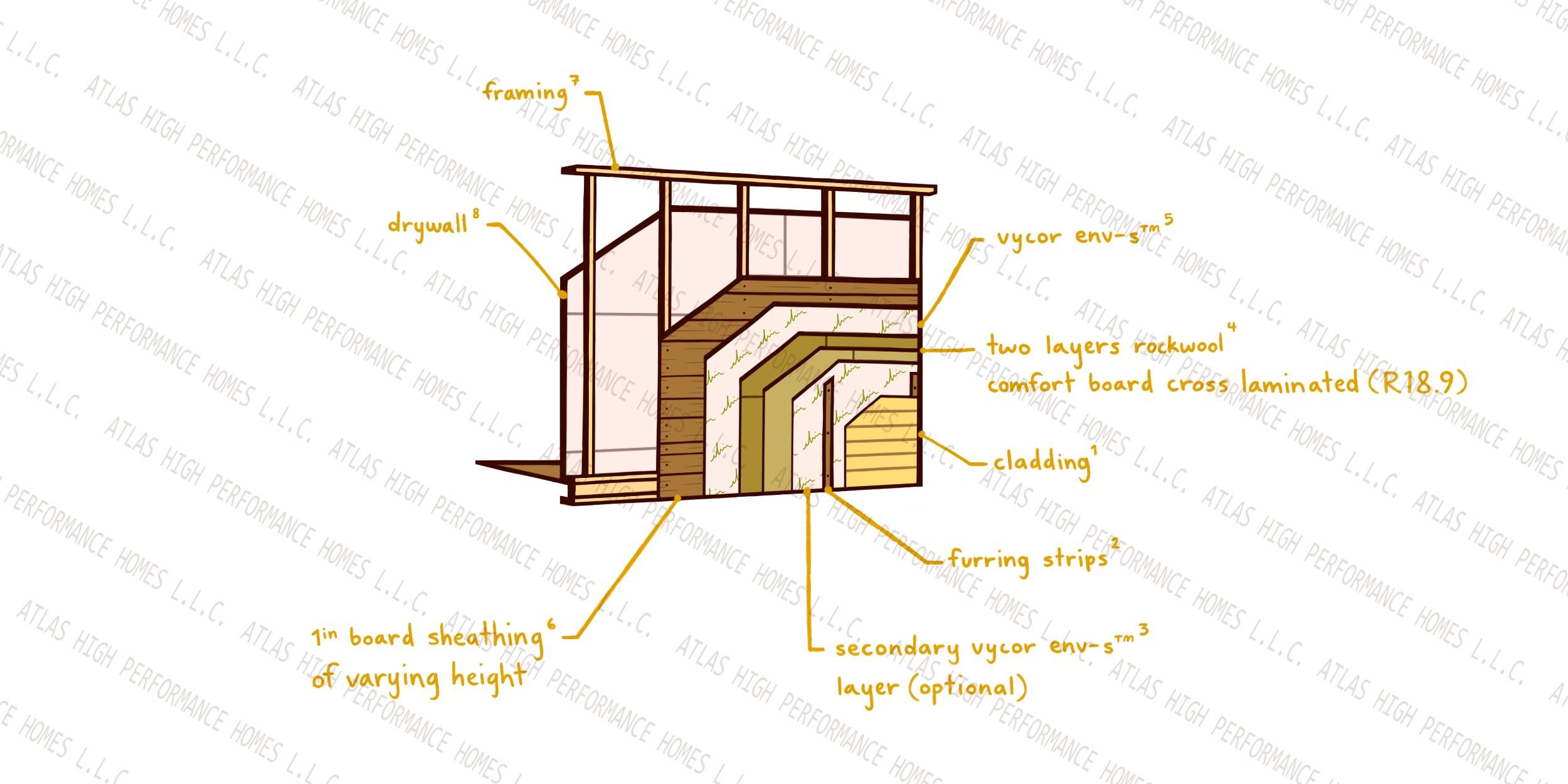
The above wall assembly was designed with New Hampshire in mind, though it would also be appropriate in other cold climates with similar heating demands and building codes, such as much of the Northeast (e.g., Maine, Vermont, northern New York, and parts of Massachusetts and Connecticut) where Climate Zones 5 and 6 predominate and outward-drying assemblies are ideal.
We service all of New Hampshire and thus wanted a NH-centric design. Our design is made not only to meet code, but also to consider the wonderful research that has been done over the years about what assemblies do and do not cause mold issues over time. Many contractors do not consider these things because the issues show up far beyond the usual 1-year warranty offered. We offer results and thus warranties of a far longer duration.
Our goal is always to maximize the value that a homeowner can get out of any given renovation. For this reason, our design meets and exceeds code. It meets the standards set by modern building science and beyond that, we do additional research to determine which materials work best over long periods of time. Here are examples of aspects that make this wall assembly the best long-term "bang for your buck" in our professional opinion:
- Prevents Condensation: Condensation is the big killer in NH. It causes interior mold, which is a huge health risk, and on top of being a health risk, it also greatly reduces the durability/longevity of the materials used. This build exceeds the minimum requirements to prevent condensation. It includes a continuous air barrier that is self-sealing around any penetrations, as well as the proper amount of exterior insulation to prevent your sheathing from being a condensing surface.
- Minimizes Energy Loss: While you could add thicker insulation to further reduce energy costs, this build is very energy efficient. There is no thermal bridging, and Rockwool actually gains R-value (a measure of the effectiveness of insulation) in extreme cold, unlike fiberglass which loses it.
- Easily Meets (and Surpasses) Code Requirements: This surpasses code requirements by a decent margin. We find code to be insufficient to protect the health of our clients and longevity of materials, so we surpass it. We are here to maximize the value of any given build as said before, not to just do the bare minimum that the government allows.
- Maximizes Longevity of Materials Beyond Preventing Condensation: Other than what we consider the bare minimum of preventing condensation, we also have chosen to include details that maximize longevity of materials. This ranges from picking materials with high drying potential and hydrophobic qualities like Rockwool, as well as including a rainscreen which allows water to escape if it ever does get behind the siding.
- Rockwool is Environmentally Sustainable, Does Not Off-Gas, and Is Non-Combustible: Rockwool is environmentally sustainable, does not off-gas, and is non-combustible—in fact, it does not even create smoke in a fire. This is far better than foam board, which off-gasses, is produced in a way that is very damaging for the environment, and in the event of a fire would terribly pollute the air and possibly the soil of your property after accelerating the fire due to containing petroleum.
Additional benefits that further enhance long-term performance and value include:
- Superior Whole-Wall Thermal Performance: The cross-laminated Rockwool ComfortBoard provides an effective whole-wall R-value of ~22–23, well above code minimums in both NH Climate Zones 5 and 6, delivering excellent energy savings year after year.
- Acoustic Comfort: Rockwool’s dense mineral wool structure provides outstanding sound absorption (typically with a Noise Reduction Coefficient [NRC] of 0.9–1.05 depending on thickness and density) and superior sound transmission blocking (often improving wall STC ratings to 43–52+ in assemblies), outperforming foam board (which typically has lower NRC ~0.7 and STC ~37–39). This reduces outside noise and improves indoor peace and quiet.
- Dimensional Stability & Insect Resistance: Unlike some organic insulations, Rockwool does not sag, settle, or support mold/insect growth, ensuring consistent performance over decades.
- Fire Resilience: In addition to being non-combustible, Rockwool maintains structural integrity in high-heat conditions, offering superior passive fire protection compared to many alternatives.
- Versatile & Future-Proof Design: The furring strip rainscreen system accommodates virtually any cladding a homeowner might choose (siding, brick, stucco, etc.), making future updates or aesthetic changes simple and cost-effective without compromising the wall’s performance.
This assembly isn’t just about meeting today’s standards—it’s about building a healthier, more durable, and more valuable home for the long haul.
We hope that we can do our part to put an end to the condensation/mold epidemic (due to lack of proper assemblies) in NH by creating more competition in the market and educating homeowners with articles like this one. (Interested in how to make this assembly cheaper without risking condensation? Read article.)
Join our mailing list to be notified when the next article comes out!