(603) 688-6096
  AtlasRemodelingNH@gmail.com




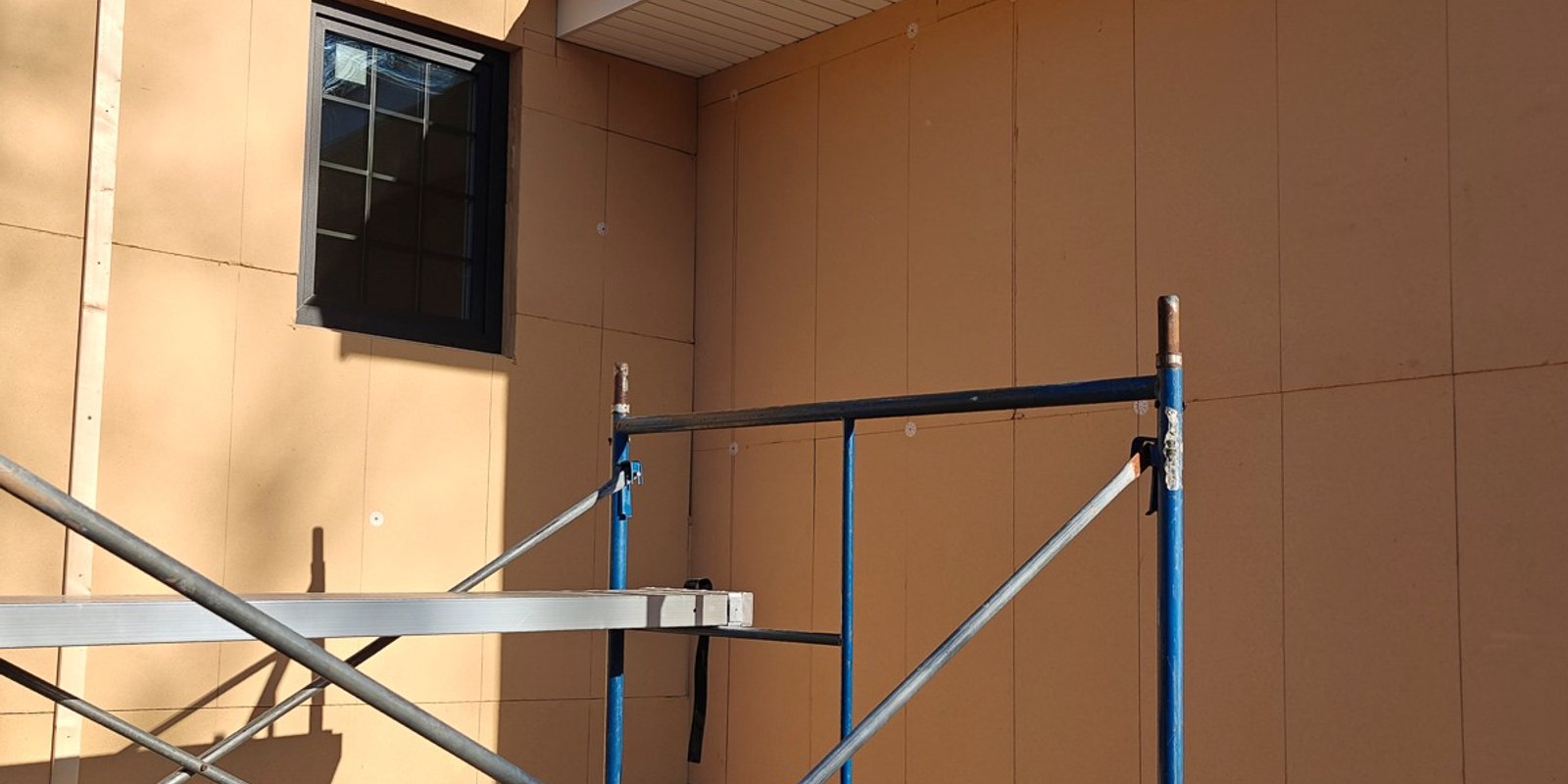

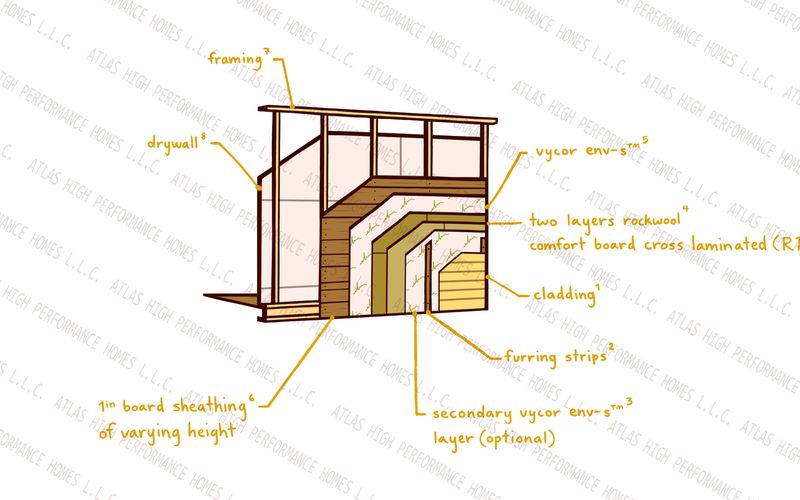
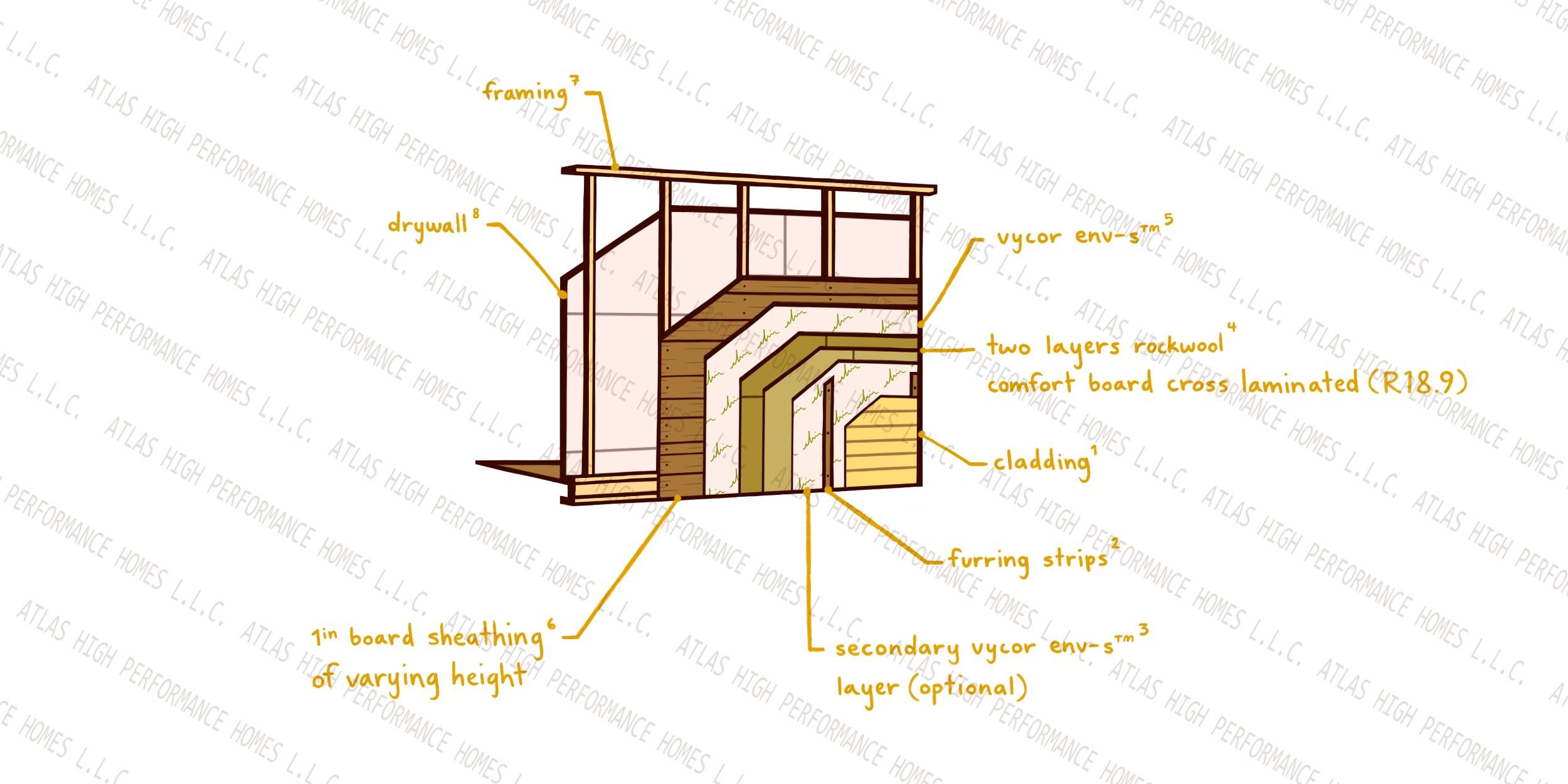
In New Hampshire’s cold climate, continuous exterior insulation is essential. Without it, you will end up with thermal bridging through the studs, condensation, and in the long term, mold.
In my "Ultimate Wall Assembly" article I recommended Rockwool ComfortBoard 80. I still love that product, but it is almost twice as expensive as TimberBoard per square foot. Due to this limitation of the product, I have been searching for a more reasonably priced alternative that isn't EPS. EPS is not as vapor permeable as Rockwool, and it acts as fuel in a fire. I will say, Rockwool ComfortBoard 80 is still my favorite option below grade and if you have a very flexible budget I say go for it, but for this article we will focus on a new more affordable option for above-grade uses.
TimberBoard is the star of the show in this article.
TimberBoard is a rigid wood fiber continuous insulation made right here in the USA by TimberHP. It delivers better overall value per dollar than Rockwool, while leaving EPS far behind in fire safety, moisture safety, sustainability, and real-world durability for above-grade walls in New Hampshire homes.
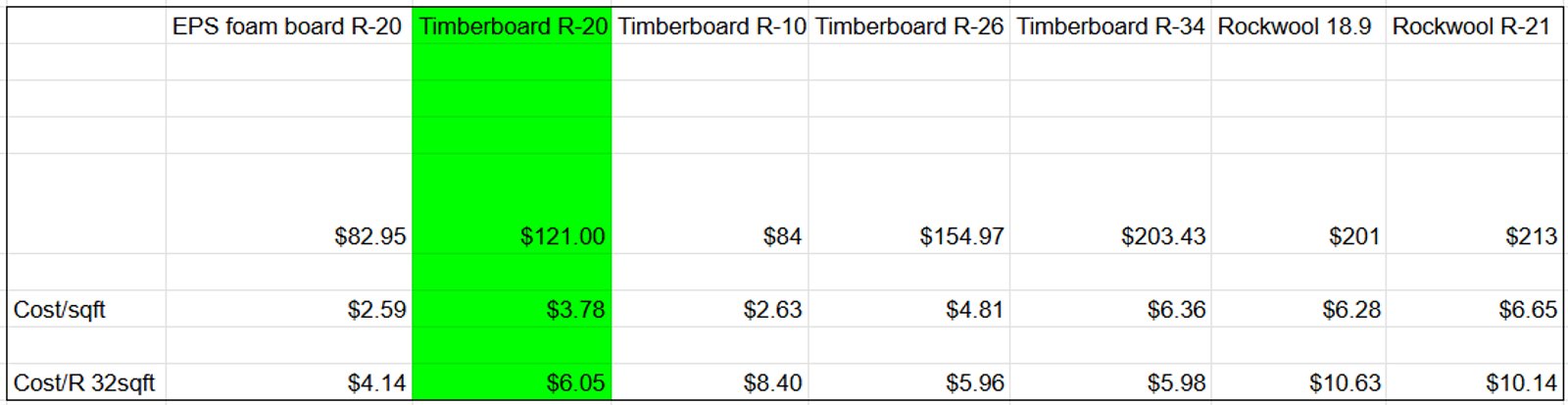
Quick Cost Comparison (32 sq. ft. coverage)
Here’s how the numbers stack up for common R-values of continuous exterior insulation:
Note on pricing: All cost figures below are accurate as of today (January 31, 2026) and are subject to change due to market conditions, suppliers, quantities, and location. Always get current quotes for your specific project.
These prices are WAY better than Rockwool. This chart shows why you might choose TimberBoard over Rockwool. I should also note this: TimberBoard comes in far thicker sections, up to R-36. This reduces the layers needed, reducing the labor needed to reach the correct R-Value by up to 50%.
Now I will go over the reasons that make TimberBoard better than EPS. The following statements shown in italics are pulled directly from their website for your conveniencehttps://www.timberhp.com/:
Compressive Strength
When it comes to choosing continuous exterior insulation for your New Hampshire home, compressive strength is a big deal. It determines how well the material holds up under pressure. This especially applies when you install furring strips and you don't want to compress the insulation behind them. TimberBoard shines here with its impressive 10-20 psi compressive strength at 10% deflection, making it far more robust than Rockwool ComfortBoard's 2.9-4 psi or even standard EPS foam's 10-15 psi (which often feels squishier in real-world handling). This is especially important in a vented over roof assembly because we use 2x4's on end. This can cause a small amount of compression which reduces your ventilation plane clearance.
Fire Resistance
Despite being made from wood, TimberHP wood fiber insulation products are fire resistant without the use of toxic chemicals. TimberBatt and TimberFill achieve an ASTM E84 Class A flame and smoke spread rating thanks to treatment with liquid borate, a naturally occurring mineral that provides effective fire resistance without relying on harmful flame retardants. TimberBoard achieves a Class B rating without any added fire retardants.
This contrasts with foam insulation such as EPS which can add fuel to a fire.
Moisture Management
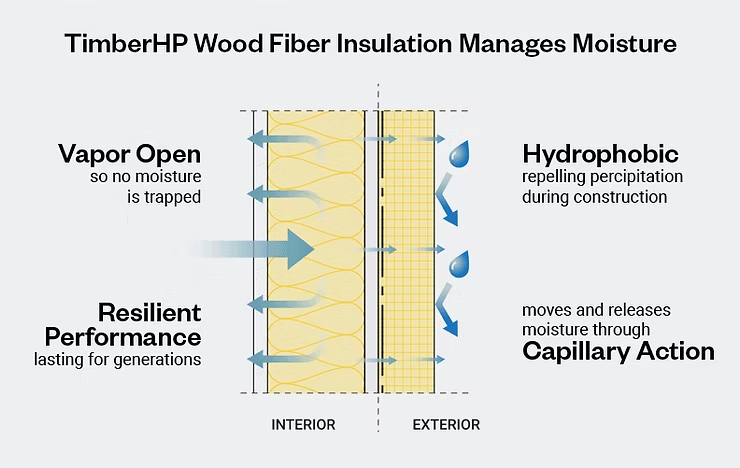
Wood fiber insulation is vapor-open and breathable, helping avoid the moisture issues commonly associated with foam insulation products. Water vapor passes through the insulation rather than becoming trapped, preventing mold, condensation, and rot, and promoting improved indoor air quality and a longer-lasting building envelope.
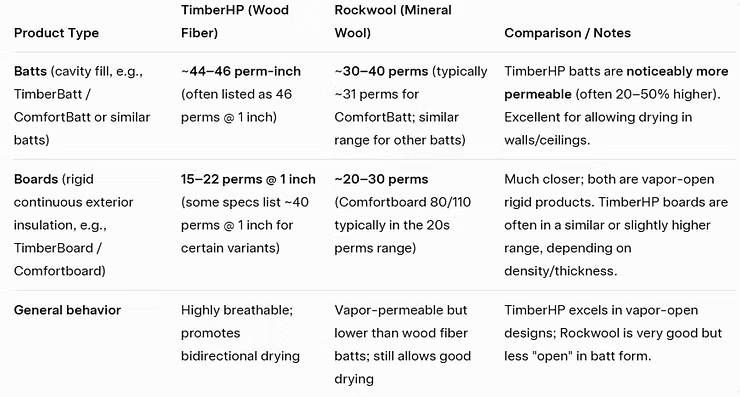
The permeability of TimberBoard is quite impressive. TimberBoard actually blows EPS out of the water completely, to the point where EPS was not even worth including in the chart. Thin EPS can be 2–5 perms, but it drops all the way down to 0.5–1.25 perms at 4 inches." As you are about to see in the chart below this is nothing compared to TimberBoard, TimberBatt, ComfortBatt, or ComfortBoard.
Acoustic Comfort
Our wood fiber insulation products outperform in acoustic performance because of its high density and fibrous structure. Perfect for mixed-use and multifamily buildings, our insulation solutions often match or exceed mineral wool in common wall assemblies, delivering quieter, more comfortable indoor spaces.
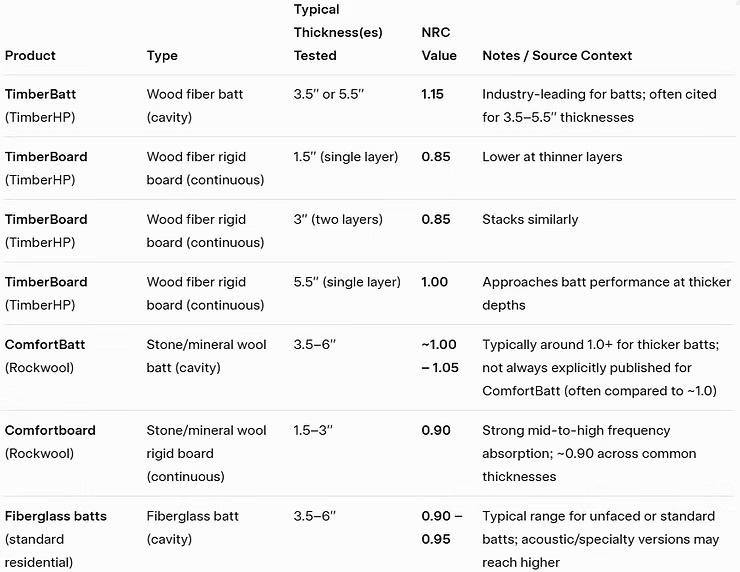
Let's put that into numbers. Looks like TimberBatt is leading the industry. TimberBoard is not far behind Rockwool ComfortBoard either.
TimberBoard creates far less toxic dust than alternatives when cut.
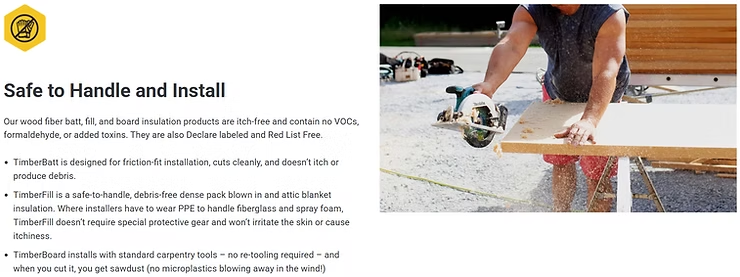
When cutting TimberHP TimberBoard, the dust is primarily fine wood fibers (from sustainably sourced softwood residuals) — chemically similar to ordinary sawdust produced by cutting plywood, OSB, or dimensional lumber. The board's composition is approximately 90–95% wood fiber, with small amounts of additives:
- pMDI (polymeric methylene diphenyl diisocyanate) binder (~3–8% by weight), which fully reacts and cures during manufacturing into stable, inert polyurethane bonds.
- Paraffin wax (~1–3%), a hydrophobic additive for water repellency.
In the finished, cured product, these components do not off-gas VOCs, formaldehyde, or uncured isocyanates. The resulting dust contains no loose fibers, unlike fiberglass (whose fibers can embed in skin and lungs), no respirable mineral wool fibers (potential irritants), and no microplastics or styrene from EPS foam. Manufacturer statements emphasize that TimberBoard is itch-free, produces only sawdust-like debris (no airborne microplastics), and contains no added toxins, formaldehyde, or Red List chemicals.
Common alternatives generate more concerning dust:
- Fiberglass batts/boards → release fine glass fibers that irritate skin, eyes, and respiratory tract; often include dedusting oils or binders.
- Mineral wool (Rockwool) → produces respirable fibers that can irritate lungs; dust may contain trace binders or dedusting agents.
- EPS foam → creates plastic dust particles (polystyrene) that persist in the environment and may carry trace manufacturing residues.
TimberBoard dust is effectively wood dust with trace inert cured binder and wax — biodegradable in the organic portion and non-leaching in the synthetic fraction at these low levels. Standard dust-control practices (e.g., dust extraction, N95 mask, tarp under cuts) are recommended, as with any wood product, but the overall toxicity profile is significantly lower than synthetic or fibrous alternatives.
Dual Reduction of Carbon Emissions
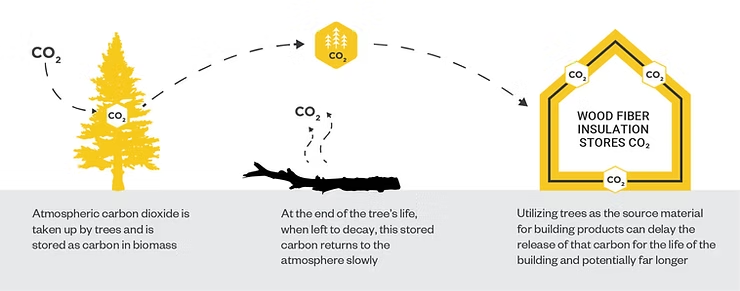
Wood fiber allows us to tackle carbon emissions on two fronts: operationally, by reducing heating and cooling loads, and through embodied carbon, by locking away biogenic carbon in the built environment. Further, a building insulation life cycle analysis shows that wood fiber drastically reduces carbon emissions compared to other materials during the manufacturing process, while in use, and after disposal or reuse.
Sustainable Forests, Local Economic Revitalization
TimberHP promotes sustainable forest management by sourcing wood fiber from abundant residual softwood chips—byproducts of responsible lumberyard milling that keep working forests healthy and productive. This approach supports Maine’s long-standing forestry traditions while reducing waste and ensuring that every tree harvested contributes to a renewable, circular materials economy.

For decades, the lumber industry in New England supported paper mills. With the age of the internet, far less paper became necessary. TimberHP is re-opening old mills that were abandoned to produce this wonderful product. When you buy this product not only do you directly benefit yourself, you also keep money in the local economy and help bring the small New England towns that produce it back to life.